Yelpers have reported that Sibiu Travelers Hostel/Villa Teilor Has Closed
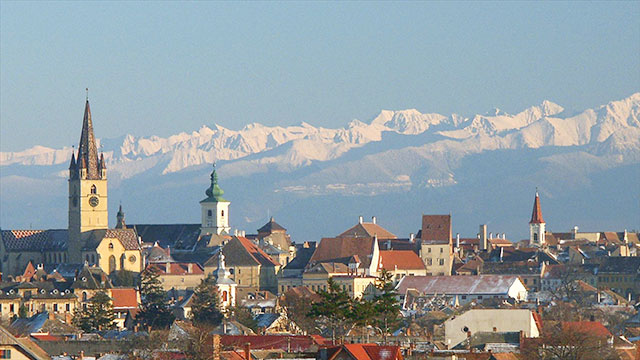
Sibiu Travelers Hostel/Villa Teilor was situated in a quiet part of the town . The hostel was opened in 2008 and received a 2 star qualification from the Romanian Department of Tourism.
Yelpers have reported that this hostel has closed.
Content is from the hotel's 2013 archived pages.
The address is:
Villa Teilor
Sibiu Travelers Hostel
Strada Teilor 4
550216 Sibiu
Romania
Hello dear traveler!!
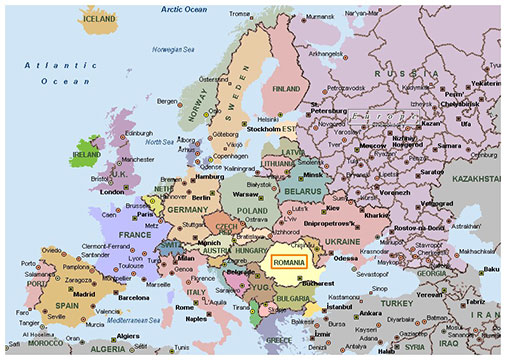
We are glad to welcome you in the newest hostel in the wonderful medieval town of Sibiu in the heart of Romania! The hostel is situated in a quiet area of Sibiu only 6 minutes walk from the train & bus station and just 15 minutes walk to the ancient centre, with all the main tourist attractions!
Sibiu Travelers Hostel/Villa Teilor was opened in 2008 and received a 2 star qualification from the Romanian Department of Tourism. The founder has a 20 years experience of providing housing to all kinds of groups, so you may expect great comfort and service.
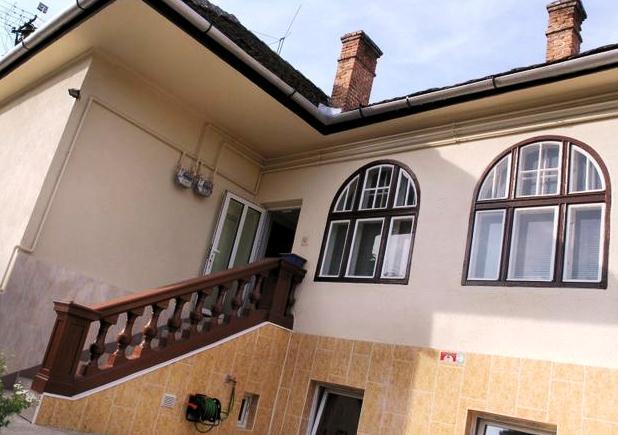
The wishes & expectations of the hostel traveler were the main guidance in the design of the hostel, which resulted in our fair & no-nonsense approach: giving shelter in most comfortable, friendly way and making you feel welcome & at home, giving you a nice breakfast and providing you a lot of free services for a real low price!
By the way: teilor means lime, linden tree. Ever had a look on the Internet or in an encyclopedia what is said about housing in relation to linden tree ?
Besides the fact Romanians use linden blossoms to make a healthy tea with relaxation & healing effects, the lime tree has a very positive meaning in general in history as a protective force against evil powers, but also as a romantic symbol in the love between the sexes!
Also in literature and music it always had a prominent place.
| The famous Romanian poet Mihai Eminescu wrote in his poem Mai am un singur dor (One Wish Alone Have I):
|
The Moldovan music group O-Zone had the hit Dragostea Din Tei (Love From Linden Trees) in 2004. |
||||||||||
And why we tell you this? Sibiu Travelers Hostel is situated in Strada Teilor and almost directly in front of our hostel stands a 'teilor' tree!!
~~~
Observation:
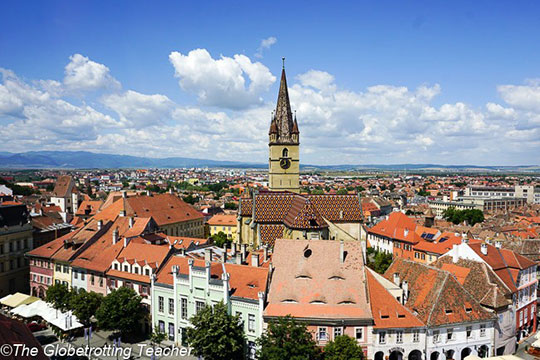
Last week when I was visiting my mother at her assisted living at Bel Air home for seniors, we spent most of the afternoon looking through picture albums while she reminisced about the particular trip and I recorded her. One album was devoted to a month long trip my parents took through Romania. My parents were always the frugal travelers staying at hostels rather than at hotels. When they stayed at a B&B they considered it splurging! Even though they were in their mid sixties when they traveled through Albania, hostels were where they would stay. When they were in Sibiu, sure enough they stayed at the Sibiu Travelers Hostel. I looked at pictures of steep staircases that separate the Lower Medieval Town with its colorfully painted small houses from the Upper Town, the wide-open expanse of Piata Mare square which has been Sibiu’s center since the 15th Century. My parents love visitng European religius landmarks. Sibiu has several including the Catholic Basilica, a historic landmark with a stunning interior. Likewise there were a number of pics of the Orthodox Cathedral with its colorful and quite grand murals and frescoes covering the walls. She also had fantastic views of Sibiu taken from the Council Tower which, according to my mother, dates back to the late 1500s and sits in the passageway between the Piata Mare (Big Square) and Piata Mica (Small Square). I felt like I was listening to a professional travelogue. My mother was an art history teacher for years which is probably one reason she was so interested in traveling extensively around the world. It was a delightful afternoon. Whenever I listen to my parents' adventures, I am thankful they took so many pictures and appreciate how rich a live they have lived.
~~~
HOW TO FIND THE HOSTEL?
Arrivals by train
After arriving at the train/busstation station there are two options:
- Walk on the platform of your arrival, keeping the train station at your left until you have almost reached the end of the train station building. At that point cross the train rails and at the other side you will find an iron stair with approx. 7 steps, after descending go left and follow the street parallel to train rails (Strada Garii). After a short time you will come at a bend in the road, follow the bend and continue your direction parallel to the train rails by going left into Strada Moara de Scoarta and take the second street at your right: Strada Teilor. The hostel is on number 4 approximately fifty meters at your right!
- The other possibility: go to the platform which is directly in front of the station and start walking, keeping the train station building at your left hand and pass the back side of the autobus station (autogara) and continue your way until you arrive at the stair of a tunnel, descend and walk through the tunnel and after ascending go left (Strada Moara de Scoarta) and take the second street at your right: Strada Teilor. The hostel is on number 4 approximately fifty meters at your right!
Arrivals by autobus
- If you arrive on the bus station very near to the train station, please follow the same instructions as above. In case you arrive at a bus station somewhere else in town, please follow the instructions Arrivals by car (see under).
Arrivals by car
- From directions Bucharest/Brasov/Fagaras. Follow the roadsigns to the center. Close to the center you will come to a busy cross with the huge Ramada Hotel building left in front of you. At that point go to the right on the central Boulevard Cormeliu Coposu and after approx 800 meter cross the traffic circle (see right at the bottom on the map above) with Strada H. Oberth at your right and Strada Constitutei left. Pass the viaduct and directly after descending (not the regular cross in front of you, but already before) take the sharp 180 degrees bend and follow this road until you drive parallel to the train rails at your left (Strada Garii). After a short time you will arrive at a bend in the road, follow the bend and continue your direction parallel to the train rails by going left (Strada Moara de Scoarta) and take the second street at your right: Strada Teilor. The hostel is on number 4 approximately fifty meters at your right!
- From directions Sebes/Deva/Nadlac. Follow the roadsigns to the center. Close to the center you will come to a busy cross with the huge Ramada Hotel building at your right. At that point go to the left on the central Boulevard Cormeliu Coposu and follow the directions as described above.
- From directions Cluj/Medias/Sighisoara. Follow the road signs Gara and drive to the traffic circle (see the map) and continue your way as described above.
- Another option for all arrivals by car: follow the road signs Gara and drive to the traffic circle (see the map) and continue your way as described above.
Services
WHAT WE HAVE TO OFFER YOU ?
INCLUDED SERVICES
- Breakfast: bread, margarine, jam, coffee, tea & mineral water
- Easy & free parking, also safe parking on the property possible
- Internet on two high connection speed PC's
- Free wireless Wi-Fi Internet log-on facility with your own notebook
- Upload facility for your digital photos in high resolution
- Coffee, tea & cooled mineral water all day & free bath towels* and clean sheets
- Washing service on a user friendly machine with a 1400 rpm drying capacity *
- Extremely cheap international PC to phone calls by our Skype phone facility & of course free PC to PC telephone calls
- Private lockers to store your valuable things safely, big enough to put in your laptop together with other stuff & free baggage storage
IN CASE YOU WOULD THINK THIS IS ALL, WE HAVE MORE, MUCH MORE...
WHERE YOU FIND ALL THIS FOR A PRICE STARTING AT JUST € 10.80 A NIGHT? *
FREE SERVICES
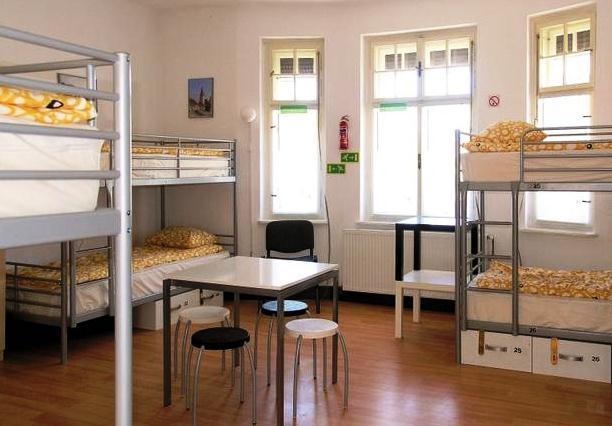
- High quality solid made beds, anti-allergic comfortable mattresses and good quality pillows
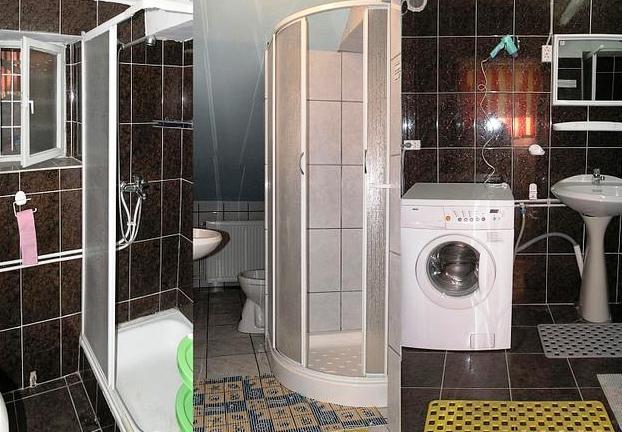
- Clean modern comfortable bathrooms & toilets
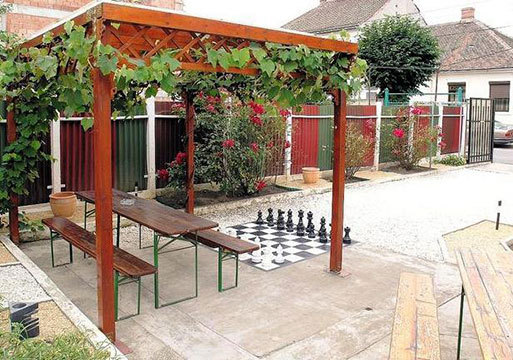
- Nice garden with a terrace, tables & chairs and a covered patio for planning your daily schedule in a relaxed atmosphere, or hanging out after an intensive day. Garden chess play and fully equipped barbecue set available!
- An enthusiast (Romanian-English-French-German-Dutch speaking) staff which is at your service day & night & friendly informative atmosphere with much (photographic) attention for the cultural & architectural heritage of Transylvania
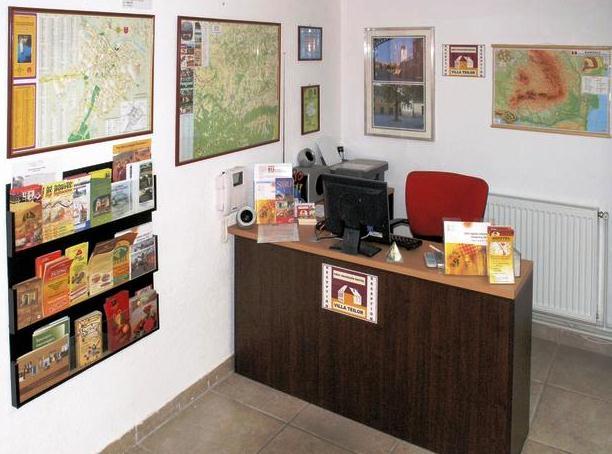
- Flyers and lot of touristic information about activities, places to see in & around Sibiu, including bus & train schedules
- Bookings for all other hostels in Romania, booking tickets to various cultural events, round-trips and museums
- Rich choice of cooled drinks available on payment. Of course you are free to buy your drinks yourself at the nearest store, bring them in the hostel and put them in our refrigerator and enjoy your own cool drinks later!
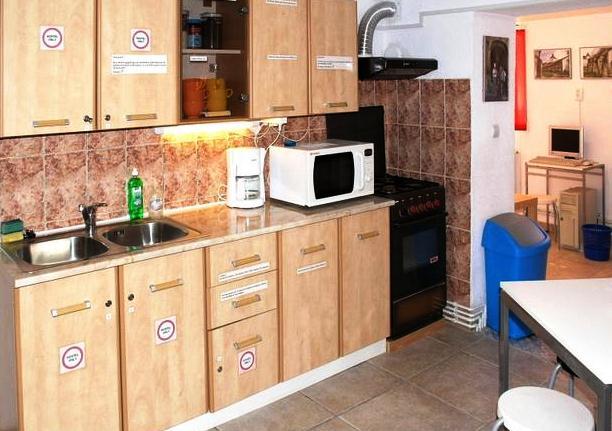
- All cooking facilities to prepare your own meal, including pots, pans, dishes & cutlery & big model refrigerator to store your own food & drinks
WHERE YOU FIND ALL THIS FOR A PRICE STARTING AT JUST € 10.80 A NIGHT? *
You find it in Sibiu Travelers Hostel/Villa Teilor, Strada Teilor 4 in Sibiu.
The coolest place in town!
Throw that rucksack from your back & enjoy your stay in our hostel, enjoy Sibiu, enjoy Transylvania, enjoy Romania!!
*Free laundry at a minimum stay of 2 nights & drying outside (maximum 1 load per 2 persons). Otherwise: € 2.00 (RON 10.00). Electrical drying: € 2.00 (RON 10.00)
*Free towels at a minimum stay of 2 nights. Otherwise: € 1.00 (RON 5.00) per person
*Prices: for current prices see our Contact & Booking section. For special offers see our Home page
Sibiu & Around
Did you know that: the world's first homeopathic laboratory was opened by Samuel von Hahnemann in Sibiu in 1797 * Sibiu is home to the first hospital in Romania in 1292 * The first pharmacy was founded in Sibiu in 1494 * The Brukenthal Museum in Sibiu, which was opened in 1817 is the oldest museum in Romania * The printing of the very first book in Romanian language took place in Sibiu in 1544 *
This page is meant to give you just some brief idea of all interesting things to explore in and around Sibiu. Of course our staff is always ready to answer all your questions and to help you to make a nice schedule for the day!
Some practical things
The best way of transport in Sibiu is walking, but if you want to save time you can use a taxi (relatively cheap) or the well functioning very cheap public transport. In general most buses & trams have frequent schedules.
Two sorts of tickets exist: bilet transport (regular one-way bus ticket) and bilet transport valabil 1 zi (ticket valuable a full day on all local lines).
For trips outside Sibiu you can use the extended network of bus & minibus routes. Also the train is a good option, not very fast but reliable in general.
Bicycles can be rent at Rent-A-Bike (website under construction) via tel. (+4)0740157944 (English, German, Hungarian & Romanian spoken)or by email.
Bicycles are delivered and picked up at the hostel. Great service!
Something about Transylvanian history
In the good old times of the 12th and 13th century the area of Transylvania was repeatedly terrorized by Tartars & Turks to invade Europe in an attempt to extend their influence and territory. The Hungarian ruler at that time tried to persuade people to descend on the area by promising a lot of benefits. In return the new residents would have the obligation to defend the land. This resulted in the settlement of the Saxons, who founded seven towns, among them Sibiu (Hermannstadt), Brasov (Kronstadt) and Sighisoara (Schässburg), giving Transylvania its German name Siebenbürgen. The heart of these towns included churches with fortifications. A lot of these defending constructions & fortified churches nowadays are on the UNESCO World Heritage List.
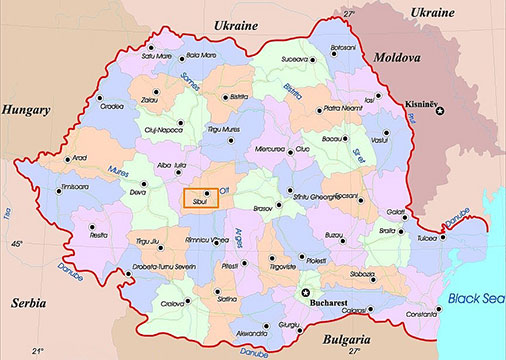
Until World War One Transylvania has been largely associated with Hungary, except for the period it was a part of the Ottoman Empire and had a semi independent state recognizing Turkish suzerainty. After WW1 Transylvania was finally united with Romania. This unification has never been fully accepted by Hungary, which reoccupied the territory from 1940 to 1944. After WWW2 Transylvania came back under Romanian control. Through the history of Romania the territory of Transylvania was and is in some way strongly connected with national identity and sentiments as clearly demonstrated on the photos showing a mass demonstration and people publicly kneeling and praying, in a desperate attempt to undo the situation after Hungary has appropriated the region again in WW2.
Sibiu highlights
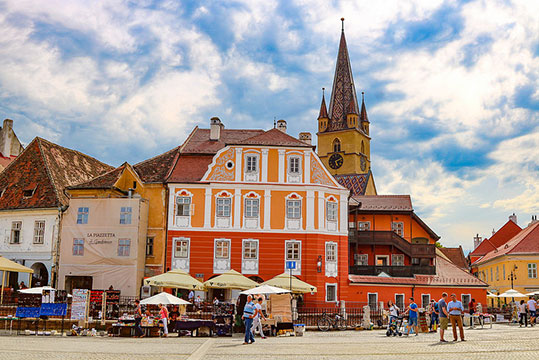
It is not difficult to make any program for visiting the town, there are simply too many interesting things to see and explore!
Starting your walk from the square in front of the train station, just follow Strada General Magheru and you will pass Ursuline Church (15th century, founded by Dominican monks and a beautiful baroque interior). Keep right and take Strada Ivram Iancu, one of the oldest streets in Sibiu formerly inhabited by wealthy guildsmen. Before you enter Piata Mare bring a visit to Strada Selarilor (parallel to Magheru Street) and feel yourself suddenly in an alchemic medieval surrounding with Franciscan Church as the main building (impressive baroque elements in the altars).
On Piata Mare you will see the former Council Tower (1588), the Roman Catholic Cathedral (built between 1726 and 1733) and the famous Brukenthal Museum founded in 1817 and situated in the baroque palace of Baron Samuel Brukenthal (1721-1803). The museum contains paintings of the great masters as well as excellent archeological, folk-art and silverware collections. In Lonely Planet described as the oldest and likely finest art gallery in Romania!
Continue your way on Piata Mica and look around at the variety of medieval houses in many pastel colors. Also the Pharmaceutical Museum and the Franz Binder Museum of World Ethnology (including a real Egyptian mummy!) can be visited on this square.
Before descending the stairway at the east side and ending up in a maze of narrow, picturesque cobblestone streets, do not forget to walk over Iron Bridge (1859), also called Bridge of Liars, referring to the tricky merchants who did their trade on this place in earlier times and all the lovers who promised "eternal" love to each other! Very nearby you will find the Evangelical Church (built 1300-1520) on Piata Huet.
Piquant detail: the son of Vlad Tepes ("Dracula"), better known as Prince Mihnea the Bad was murdered on the square in front of the church and his tomb is in a closed section behind the organ.
A little further on southwestwards you can see the lovely former Primaria Municipiului (1470) and now the City History Museum at the beginning of Strada Mitropoliei, but without any doubt the street’s beauty is the Orthodox Cathedral from 1906. The basic architectonic plan was the Hagia Sofia in Istanbul!
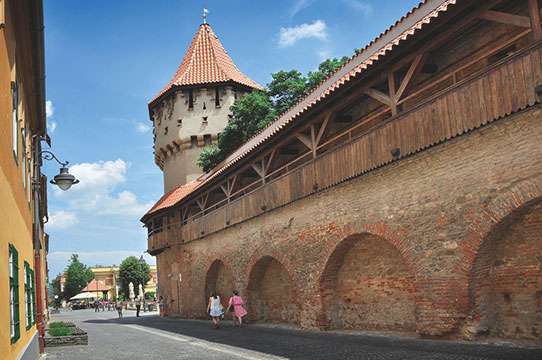
Especially recommended: Strada Cetatii with its renovated parts of the ancient city walls and defending towers, including the so called Haller Bastion with another piquant detail: the irregular holes in the wall were originally quickly improvised wall openings to get rid of dead bodies during the period that Sibiu was ravaged by the pestilence. In the same street you will find the nicely restored Thalia Hall (base of the Philharmonic Orchestra), the National History Museum and the Museum of Natural Sciences with its valuable exhibits. Do not forget to visit the beautiful and friendly Sub Arini Park with its richness of roses and young couples walking hand in hand!
And least but not last and highly recommended: the fabulous open air ethnographic Astra Folk Art Museum in Dumbrava Forest exposing a great quantity and variety of authentic rural buildings, farms, mills, churches and houses. Under good weather conditions it is easy to pass the day in this wonderful museum, eventually combined with a visit to the nearby zoo.
Around Sibiu
Avrig, about 26 km. east from Sibiu and famous for its weavers, furriers, tanners, wood cutters and glass blowers. Few local museums with very unique exhibits and the summer residence of Baron von Brukenthal (former governor of Transylvania) remarkable for its terraced park in Viennese style. And for the admirers of nature: in the mountain area south of the town is a 14 km. long road along the river through a beautiful valley.
Cisnadie & Cisnadioara, these two picturesque, friendly rural villages are only a few kilometers south of Sibiu. An impressing fortified church (1349) in Cisnadie in combination with a real interesting guided tour. Cozy centre to walk around.
In Cisnadioara lots of characteristically Saxon buildings and the ruins of a fortress upon the hill, giving a fine overview of the whole area.
Rasinari, charming, wealthy shepherd village 4 km. west of Cisnadie, two small rivers flowing through, churches and an impressive mausoleum of Metropolitan Bishop A. Saguna.
Paltinis, touristic (ski) resort situated 32 km. south-west from Sibiu. The highest (1440 meter) and the oldest resort in Romania. Breathtaking sightseeing, fresh air and snow six months per year!
Cristian 15 km. west of Sibiu the 14th century Saxon town, grandiose fortified church in the centre (possible to climb the tower to view the landscape) and a charming local village museum.
Marginimea Sibiului, which means "Borders of Sibiu", is a collection of villages in the neighborhood of Sibiu and can be described as the heart and soul of Transylvania where traditional craftsmanship is still daily practice. Woodwork, carving, weaving, painting icons on glass and colouring eggs and farmers tilling the land by horse and plough, it is all there!
Orlat, 14th century village and nearby the charming, sleepy small town Gura Ralui. In Sibiel 5 km. west of Orlat is the Zosim Oancea Icons Museum with more then 700 pieces and one of Romania’s best in his sort, very well worth visiting! 6 km. north we come through Saliste, another place full of local folklore, have a look at the interior and exterior fresco's in Grui Church (1742). Just outside the town in Poiana Soarelui visits the monumental wooden sculptures. Gales, 2km. west of Saliste has a small ethnographic & art museum and nearby is situated Poiana Sibiului, famous for its marvelous hand colored eggs. On the way into the direction of Sebes, you will come through Miercurea Sibiului, since the 12th century inhabited by the Transylvanian Saxons with a very picturesque church on the hill and a little further on its robust fortified church.
And in case you need some relaxation after all these cultural and historic activities & impressions: take a dive into one of the lakes of the most popular summer resort in the area Ocna Sibiului, 20 km. northwest of the town.
Highly recommended daytrips
During your stay in Sibiu it is a great idea to take advantage of the fact that you are relatively close to other "pearls" of Transylvania, which can be perfect destinations for a daytrip!
Cilnic/Calnic, about 12 km. before you reach Sebes turning left, preserves one of the most remarkable and fully restored Saxon fortresses in the area. Among others the complex contains a chapel, with fresco fragments from the beginning of the 16th century and decorated panels painted in Renaissance style dated 1733. Very authentic medieval atmosphere, some people say "romantic" too!
Sebes (Muhlbach), situated 56 km west of Sibiu is one of the original Siebenbürgen towns. It contains an impressive Citadel (14th-15th century) preserved in its historic origin, Student's Tower (14th century) and Princely House (16th century) served as home residence to Transylvanian princes. Sebes is also a friendly small town with typical Transylvanian houses (19th-20th century) all over the place and pleasant for just some walking around and having a coffee.
Alba Iulia 72 km. northwest from Sibiu has a special place in the national history because it was there that in 1599 as well as on the first of December1918 the union of Transylvania with Romania was proclaimed. It contains a dreamy fairy tale Citadel and fortress(excellently renovated recently) and its most beautiful part is the impressive Orthodox Cathedral (1921-22) and the peaceful gardens around it built on the old site of the citadel guardhouse for the coronation of King Ferdinand I and Queen Marie in 1922.
Sighisoara. Any visit to Romania cannot take place without having seen Sighisoara! Not only because the whole town including the environment is protected heritage by UNESCO, but also because it will steal the heart of every visitor due to the splendid hilly countryside surroundings and the medieval citadel which makes you feel going back in time and space, more then in every other place in Transylvania. And of course: this is the place of birth of "Dracula" Vlad Tepes!
Do not forget to visit the famous nearby situated fortified church complex of Biertan. During your drive you come through Medias, a good place to make a stop (fortress, Evangelic Church).
By way of conclusion
Sibiu Travelers Hostel pursuits to be just some more then a regular hostel, not only giving shelter and good services for a nice price.
We also try to make people enthusiast for the richness of Romanian culture, history, architecture, traditions and arts in general, emphasizing the rareness of the highly preindustrial character of the area. Therefore we have given much attention to the accessibility & accuracy of the information and an attractive design of this website!
Also we strive for the creation of a network of hostels, pensions, simple hotels, touristic organizations and individuals with similar historical & cultural aims, finally resulting in some kind of national culture quality label.
|
Sibiu Travelers Hostel
|
Prices
|
If your message is not replied within a few hours, please contact us by phone to be sure your reservation has come through.
Check-In & Check-Out
10:00 am - 24:00 pm: regular check-in time without appointment.
24:00 pm - 10:00 am: special check-in time on request and only by appointment in advance (email/telephone).
Delivery, storage or collecting of luggage from 10:00 am - 24:00 pm.
Please take notice that the (last) night is payable for arrivals until 10:00 a.m. in the morning.
Check-out time: until 11:00 am. It is possible to stay longer at the hostel if the situation allows so in consultation with the staff. Please be aware that facilities as beds, showers, free coffee, tea, mineral water, WiFi Internet are not obviously available anymore during that period and regular guests have preference in using PC's and seats in the hostel & garden.
About prices, discounts & made-to-measure arrangements
Current promotions/discounts can be found on the home page of this website.
In case of group bookings involving private rooms or the entire property or individual bookings for a longer period interesting price reductionscan be applied, depending from the period of the year (low/high season), group size, group composition (scholars, scouts, students etc), level of required services (with/without breakfast, bath towel, tea, coffee, excursions etc) and the length of the period of stay.
Feel free to contact us for being informed about the many different, flexible and personally measurable arrangements Sibiu Travelers Hostel can offer you and your organization! Prices and conditions in consultation.
In this period the hostel is in contact with some social groupings (a.o. students and scout organizations) to come to general agreements about price reductions for all their members.
Marriage party, jubilee or birthday?
Celebration and wishing for something really different? Or feeling a sudden spontaneous need for some short refreshing holiday to a less usual destination with others?
Already starting at € 220.00 you can book the whole hostel for a full day & night with 28 beds, spacious garden, covered patio & barbecue, fully equipped kitchen and simple breakfast, coffee & tea and all other services as mentioned on this website included!
Of course we can arrange professional catering and life music or help you to make a day or weekend program for you and your guests.
Or want to have all organized completely? All is possible and prices will be much less then expected, after all do not forget Romania (still) belongs to the countries with the lowest prices in Europe.
WizzAir and Blue Airoffer (very) cheap flights from Germany, Italy, France, Spain and UK to Cluj Napoca, Targu Mures and directly to Sibiu as well.
The splendid atmosphere in beautiful Sibiu and the short excursions to picturesque, dreamy villages in the direct surrounding and your adventurous walk in the mountains will make your party am unforgettable happening!
In this way your special celebration or short impressive holiday with friends, family or business relations becomes really close & affordable. Feel free to contact us here about all possibilities.
Not yet fully in the mood? See our short introduction movie of Romania, Transylvania & Sibiu here.
Individual bookings, multi & group bookings and advance payments
In case of individual bookings (any booking involving less then 4 nights in total) we do not ask any payments or guarantee in advance, reducing administration costs so we can keep our prices low.
Multi & group bookings (any booking involving 4 nights or more in total) have to be paid fully or partly (dependent from the moment of booking) in advance in principle within a certain period.*
Changes and cancellation
Individual bookings can be changed or canceled until one day before the planned day of arrival without costs.
In return we ask from you to be fair in case of any delay or canceling the booking and inform us as soon as possible.
Please take notice of this: not reported delays of more than 2 hours difference from the announced time of arrival can be interpret as an expired booking particularly during very busy times, which means that your bed(s) can be given away to somebody else!
So please take up contact with us if you are (seriously) delayed. Thanks!
In case of canceling your reservation on the day of your arrival or no show the first night is always payable.
Multi & group bookings can only be changed without costs until six weeks before the planned date of arrival. In all other cases costs are payable.*
Methods of payment:
- Cash in RON, Euros, Dollars, British Pounds or other currencies which are exchangeable at regular banks in Romania. Just six minutes walk away from the hostel there are two possibilities to withdraw cash from a money machine at BRD Bank & Banca Transilvania, almost all cards accepted. Click here for actual exchange rates
- PayPal. Secure payment method by Internet, payments possible in almost all currencies. Beneficiary: info@sibiutravelershostel.com. Accepted as payment in advance or as a direct payment at arrival via Internet. Additional fees for customer. Click here for more information about PayPal, a simple and secure way of payment or open an account easily.
- Credit cards (Visa, Euro Card & American Express). If your reservation was made under a credit card guarantee the hostel reserves the right to generate a pre-authorization of your due payment or to request for an advance payment in case your credit card company does not allow such an authorization.
- Bank transfer. Only accepted as payment in advance. Transfers can be made to one of our bank accounts in RON or Euros (no other currencies possible). Please be aware that this type of payments can take some time before being fully processed.
- Postal Order. Only possible for payments inside Romania and in Romanian currency (RON). Only accepted as payment in advance. Additional fees for customer.
- International Bank Cheque/International Money Order. Only accepted as payment in advance. Currency in consultation & additional fees for customer.
Our company & bank accounts data:
Sibiu Travelers Hostel SRL
Strada Teilor 4
550216 Sibiu
Romania
Guestbook
| Dear Hans, We had a wonderful time in Sibiu and we did like your place very much! For you and for your cat, Merry Christmass Razvan and Lysa |
||
| posted on 21 December 2013 by Razvan & Lysa | Romania | |
|
To Sibiu Travelers Hostel: This hostel is really nice and has everything I need. I spent2 very comfortable days here. I hope that more and more people know this place and stay here while they are in Sibiu. THANKS!! Kevin from Hong Kong. If someday you decide to come to Hong Kong, you can always contact me. (and the guests here) at XXX |
||
| posted on 21 November 2013 by Kevin | Hong Kong/China | |
|
On www.hostelworld.com: 86% |
||
| posted on 23 October 2013 by Anonymous | Netherlands | |
| thank you for the hospitality. We'll recommend you! French girls! |
||
| posted on 29 September 2013 by "French Girls"/Erasmus Project | Timisoara, Romania/France | |
| Thanks you. It was a good stay. Steve |
||
| posted on 21 September 2013 by Steve | USA | |
|
Good morning! |
||
| posted on 1 September 2013 by Julia | Australia | |
| Thank you
for very nice place to staying |
||
| posted on 30 August 2013 by Anita & Agnieszka | Poland | |
|
On www.hostelworld.com: 86%!! |
||
| posted on 30 August 2013 by Anonymous | Great Brittain | |
|
On TripAdviser: "Great Hostel", 5* |
||
| posted on 16 August 2013 by Richard | Ireland | |
|
Thanks for all. |
||
| posted on 27 July 2013 by Goulven | France | |
|
Good Morning! |
||
| posted on 21 July 2013 by Nobu, Radu & Ayako | Japan & Romania | |
|
Thanks a lot for the hospitality! |
||
| posted on 19 July 2013 by Johannes, Derick & Jesse | USA & Germany | |
|
On TripAdviser: “Clean, friendly, ideal location”, 5* |
||
| posted on 8 July 2013 by Maarten | Arnhem, Netherlands | |
|
On www.hostelworld.com: 94%! |
||
| posted on 24 June 2013 by Bert | Netherlands | |
|
On www.hostelworld.com: 97%! |
||
| posted on 14 June 2013 by Anonymous | Hong Kong | |
|
On www.hostelworld.com: 91% |
||
| posted on 5 June 2013 by Anonymous | USA | |
|
Dear Hans! (from Shirley!) |
||
| posted on 28 May 2013 by Shirley Zhai | Kanton, China | |
|
On www.hostelworld.com: 80% |
||
| posted on 19 May 2013 by Anonymous | Spain | |
|
On www.hostelworld.com: 100%! |
||
| posted on 17 May 2013 by Anonymous | Romania | |
|
On TripAdviser:“Very nice and friendly place”, 4* |
||
| posted on 9 May 2013 by Jan | ||